
AOD-9604 (5mg) Vial
Vial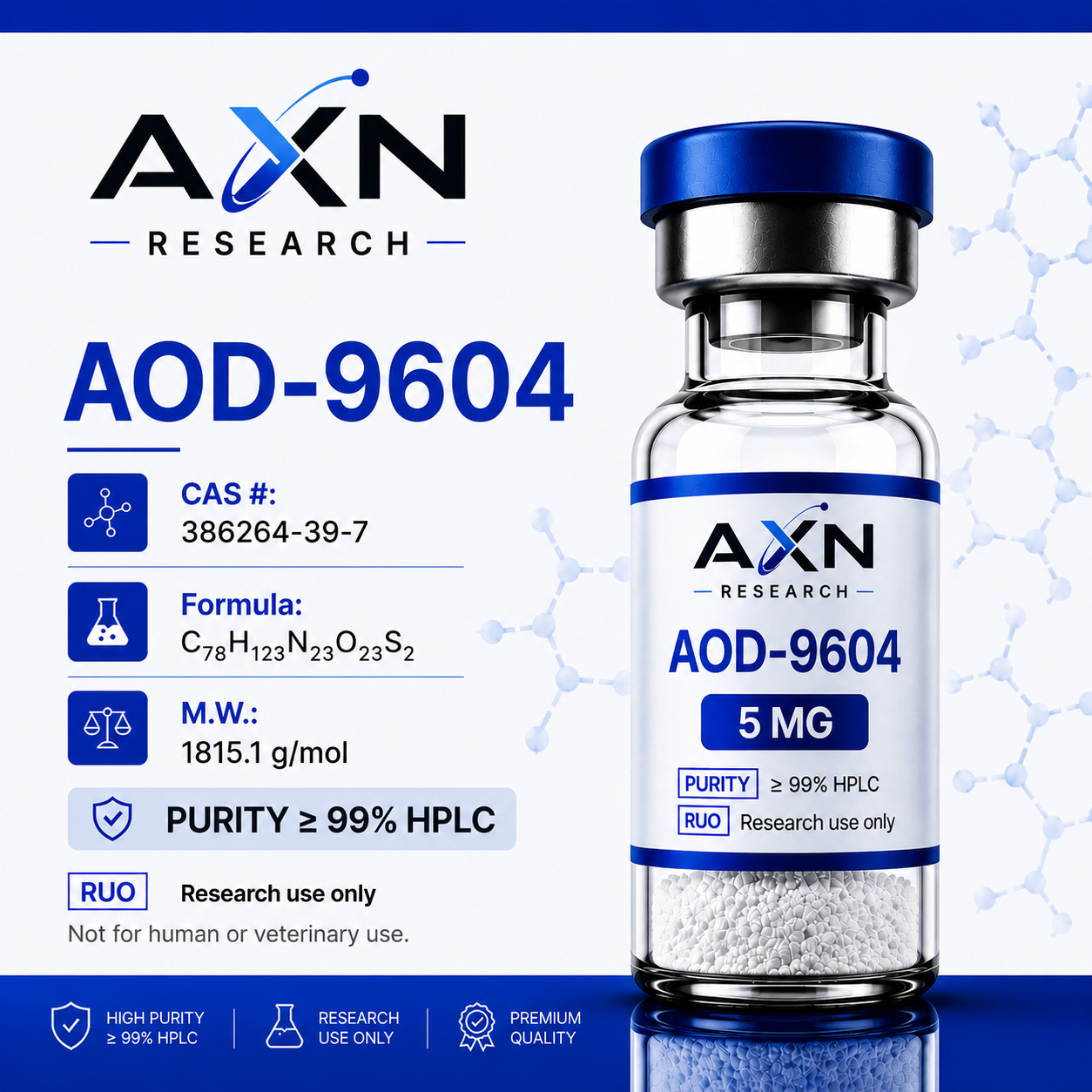
Category: Vial
Historical Development
AOD-9604 is an investigational peptide fragment derived from the C-terminal region of human Growth Hormone (hGH). Originally developed during research into metabolic and adipose tissue-related pathways, the compound gained scientific interest for its potential interaction with lipid metabolism mechanisms independent of the broader anabolic functions typically associated with growth hormone. Research efforts have explored its role in energy balance, adipocyte signaling, and metabolic regulation.
Receptor Mechanisms and Intracellular Signaling
AOD-9604 has been investigated for its interaction with pathways involved in lipid metabolism and adipose tissue regulation.
Experimental studies suggest potential influence on:
- Lipid mobilization pathways
- Adipocyte-related signaling
- Fat metabolism mechanisms
- Energy utilization processes
- Metabolic regulation pathways
- Cellular lipid handling
- Energy balance signaling networks
Preclinical investigations have also explored its relationship with lipolytic activity, fatty acid metabolism, and metabolic homeostasis without directly reproducing the full spectrum of growth hormone biological activity.
Scientific Research and Studies
In vitro and preclinical studies have evaluated the effects of AOD-9604 on lipid metabolism, adipose tissue signaling, and metabolic regulation pathways.
Research investigations have reported:
- Modulation of lipid metabolism biomarkers
- Changes in adipocyte-related signaling
- Experimental effects on fat metabolism pathways
- Alterations in energy utilization markers
- Influence on metabolic regulatory processes
- Investigational effects on body composition-related parameters
Current evidence remains primarily investigational, and ongoing research continues to evaluate long-term safety, tolerability, and metabolic outcomes across various experimental settings.
References
Selected literature involving AOD-9604, growth hormone peptide fragments, lipid metabolism, adipose tissue signaling, energy balance regulation, metabolic homeostasis, and investigational metabolic research studies.