
MOTS-C (40mg) Vial
Vial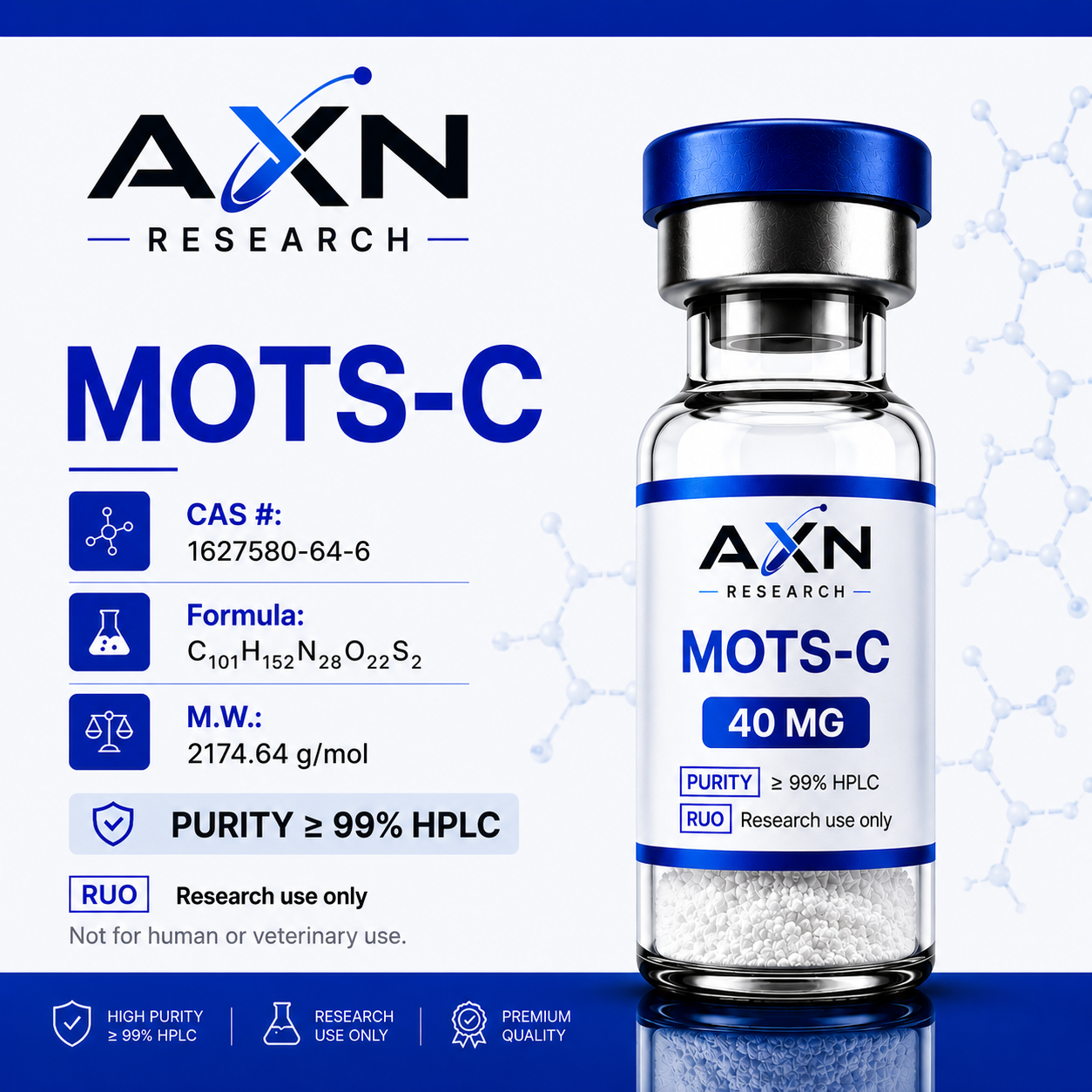
Category: Vial
Historical Development
MOTS-c is an investigational mitochondrial-derived peptide (MDP) first identified as a signaling molecule encoded within mitochondrial DNA. Scientific interest expanded during the 2010s as research explored its potential role in metabolic regulation, cellular energy balance, exercise-related adaptations, and mitochondrial communication pathways. MOTS-c has become a prominent subject in studies involving metabolic flexibility, energy homeostasis, and mitochondrial signaling mechanisms.
Receptor Mechanisms and Intracellular Signaling
MOTS-c has been investigated for its interaction with pathways involved in mitochondrial function, metabolic regulation, and cellular energy sensing.
Experimental studies suggest potential influence on:
- Cellular energy metabolism
- Mitochondrial signaling pathways
- Glucose utilization mechanisms
- Metabolic flexibility
- AMPK-related signaling
- Insulin-related cellular pathways
- Oxidative stress regulation
- Exercise-response and adaptation pathways
Preclinical investigations have also explored its relationship with mitochondrial-to-nuclear communication, nutrient sensing mechanisms, and cellular responses to metabolic stress.
Scientific Research and Studies
In vitro and preclinical studies have evaluated the effects of MOTS-c on energy metabolism, mitochondrial activity, and metabolic regulation pathways.
Research investigations have reported:
- Modulation of glucose metabolism biomarkers
- Activation of AMPK-associated pathways
- Alterations in mitochondrial signaling activity
- Experimental improvements in metabolic flexibility
- Enhanced cellular adaptation to metabolic stress
- Changes in energy utilization markers
- Effects on exercise-related physiological pathways
Current evidence remains primarily investigational, and ongoing research continues to evaluate long-term safety, tolerability, and metabolic outcomes across diverse experimental settings.
References
Selected literature involving MOTS-c, mitochondrial-derived peptides, cellular energy regulation, AMPK signaling, glucose metabolism, metabolic flexibility, mitochondrial communication pathways, and investigational metabolic research studies.