
Retatrutide (60mg) Vial
Vial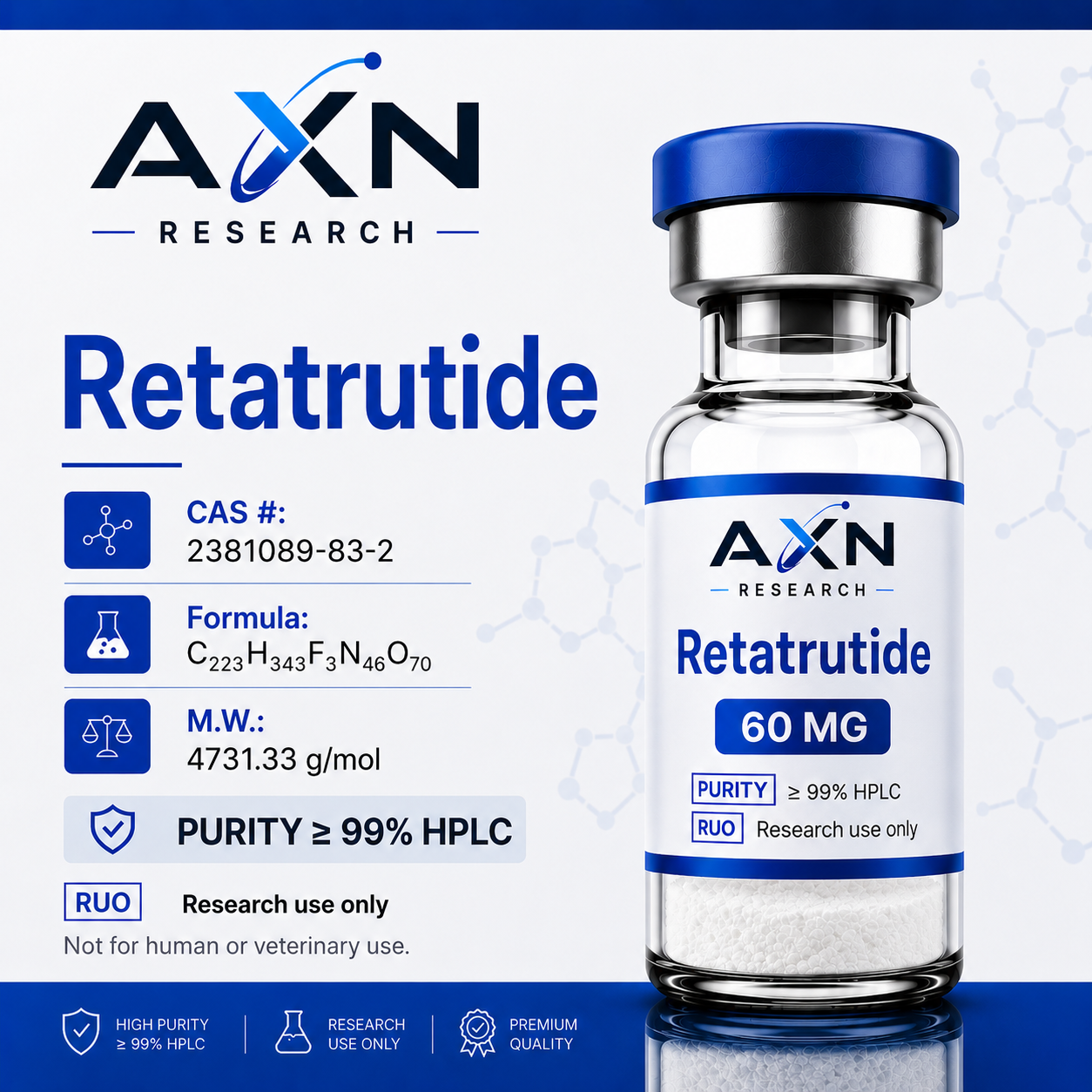
Category: Vial
Historical Development
Retatrutide is an investigational multi-receptor peptide developed for research involving metabolic regulation and energy balance pathways. Scientific development expanded during the 2020s as studies explored triple-agonist mechanisms targeting GLP-1, GIP, and glucagon receptors simultaneously. Research interest increased due to observed effects in experimental models related to body composition, glucose metabolism, appetite regulation, and energy expenditure pathways.
Receptor Mechanisms and Intracellular Signaling
Retatrutide has been investigated as a triple receptor agonist interacting with:
- GLP-1 (Glucagon-Like Peptide-1) receptors
- GIP (Glucose-Dependent Insulinotropic Polypeptide) receptors
- Glucagon receptors
Experimental studies suggest potential influence on:
- Appetite and satiety signaling
- Glucose metabolism pathways
- Insulin-related signaling
- Energy expenditure mechanisms
- Lipid metabolism
- Gastric emptying regulation
- Metabolic flexibility and mitochondrial energy utilization
Preclinical and investigational models have also explored its relationship with body composition regulation and systemic metabolic signaling pathways.
Scientific Research and Studies
In vitro, preclinical, and investigational clinical studies have evaluated the effects of Retatrutide on metabolic regulation, energy expenditure, and body composition-related pathways.
Research investigations have reported:
- Experimental reductions in body weight parameters
- Modulation of appetite-related signaling
- Changes in glucose metabolism biomarkers
- Alterations in lipid metabolism pathways
- Increased energy expenditure markers
- Improvements in metabolic parameters in investigational models
Current research continues to evaluate long-term safety, tolerability, and metabolic outcomes across different investigational settings.
References
Selected literature involving Retatrutide, GLP-1/GIP/Glucagon receptor agonism, metabolic regulation, appetite signaling, energy expenditure, body composition pathways, and investigational metabolic research studies.