
TB-500 (10mg) Vial
Vial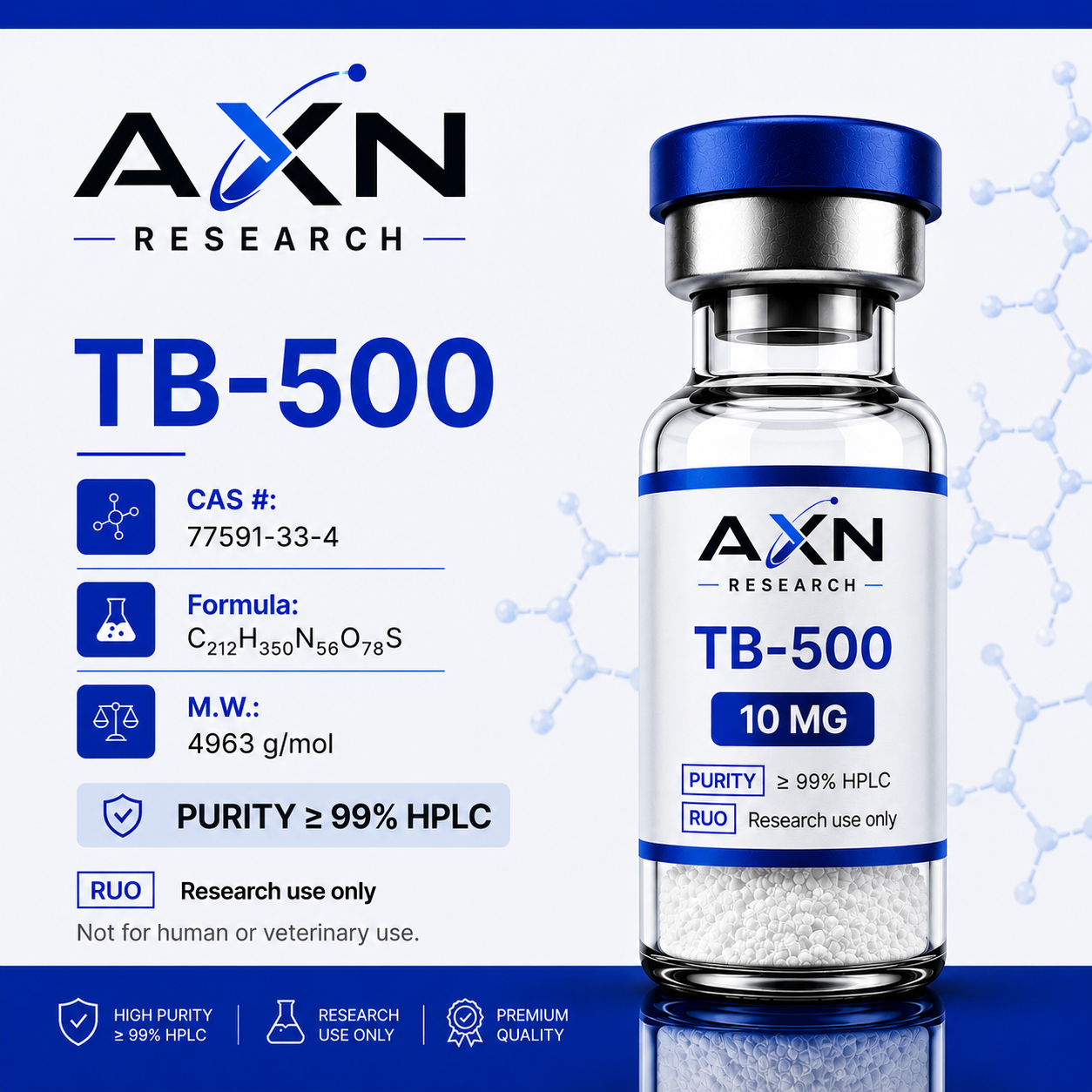
Category: Vial
Historical Development
TB-500 is an investigational synthetic peptide derived from Thymosin Beta-4, a naturally occurring protein found throughout various tissues in the body. Scientific interest in TB-500 expanded during the 2000s as researchers explored its potential role in tissue repair, cellular migration, recovery signaling, and regenerative biology. The compound has been widely investigated in preclinical models involving connective tissue support, wound healing, and cellular regeneration pathways.
Receptor Mechanisms and Intracellular Signaling
TB-500 has been investigated for its interaction with pathways involved in cellular migration, tissue remodeling, and regenerative signaling.
Experimental studies suggest potential influence on:
- Cellular migration and differentiation pathways
- Tissue repair and regeneration signaling
- Actin regulation and cytoskeletal organization
- Angiogenesis-related mechanisms
- Connective tissue remodeling
- Inflammatory response modulation
- Cellular recovery processes
- Extracellular matrix maintenance pathways
Preclinical investigations have also explored its relationship with wound healing activity, tendon and ligament recovery mechanisms, and regenerative signaling associated with tissue maintenance.
Scientific Research and Studies
In vitro and preclinical studies have evaluated the effects of TB-500 on tissue repair, cellular regeneration, and recovery-related pathways.
Research investigations have reported:
- Enhanced cellular migration activity
- Increased angiogenesis-associated signaling
- Experimental improvements in wound healing models
- Modulation of tissue remodeling biomarkers
- Enhanced recovery-related cellular responses
- Changes in inflammatory pathway activity
- Support for connective tissue maintenance mechanisms
Current evidence remains primarily investigational, and comprehensive human clinical studies involving TB-500 remain limited.
References
Selected literature involving Thymosin Beta-4, TB-500, tissue regeneration, cellular migration, angiogenesis signaling, connective tissue remodeling, wound healing pathways, and investigational regenerative peptide research.