
GHK-CU (100mg) Vial
Vial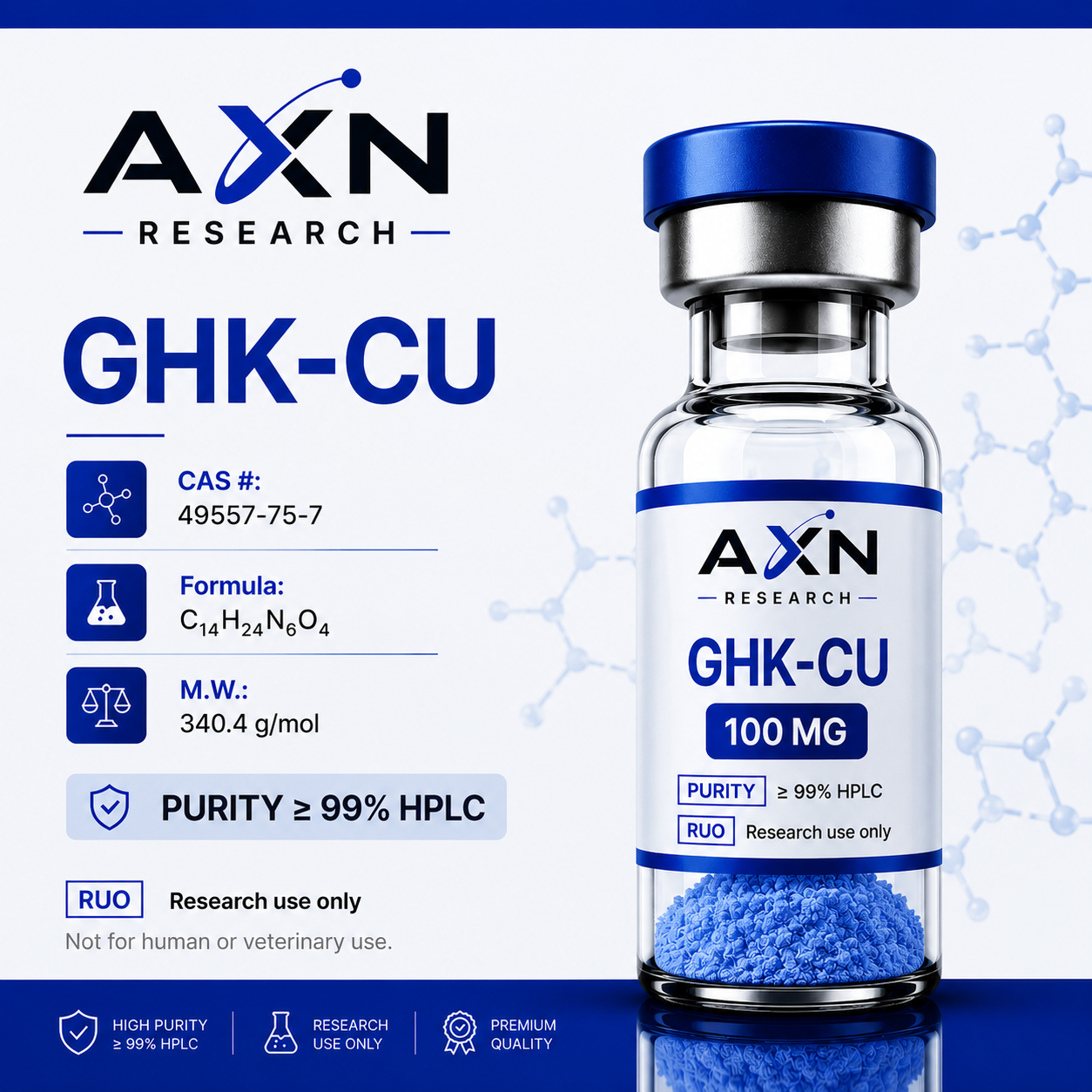
Category: Vial
Historical Development
GHK-Cu is a copper-binding tripeptide originally identified in human plasma during the 1970s. Scientific interest expanded as studies explored its potential relationship with tissue repair, collagen synthesis, extracellular matrix remodeling, and cellular regeneration pathways. Injectable GHK-Cu formulations are investigated in research contexts focused on systemic repair signaling, skin quality, connective tissue support, and experimental regenerative applications.
Receptor Mechanisms and Intracellular Signaling
GHK-Cu has been investigated for its role as a copper peptide complex involved in cellular repair, tissue remodeling, and oxidative balance.
Experimental studies suggest potential influence on:
- Collagen synthesis pathways
- Fibroblast activity
- Extracellular matrix remodeling
- Copper-dependent enzymatic activity
- Antioxidant defense mechanisms
- Inflammatory response modulation
- Tissue recovery and regeneration signaling
- Hair follicle-related cellular pathways
Preclinical research has also explored its relationship with lysyl oxidase activity, superoxide dismutase support, wound repair mechanisms, and gene expression patterns associated with tissue maintenance.
Scientific Research and Studies
In vitro and preclinical studies have evaluated the effects of GHK-Cu on collagen production, fibroblast proliferation, oxidative stress regulation, and tissue repair models.
Research investigations have reported:
- Enhanced collagen and glycosaminoglycan synthesis
- Increased fibroblast activity
- Modulation of extracellular matrix-related genes
- Experimental improvements in wound healing models
- Antioxidant and anti-inflammatory activity in cellular studies
- Potential stimulation of hair follicle-related pathways
- Changes in gene expression associated with repair and regeneration
Human research is more developed in topical cosmetic applications, while injectable and systemic research remains comparatively limited and primarily investigational.
References
Selected literature involving GHK-Cu, copper peptide biology, tissue regeneration, collagen synthesis, extracellular matrix remodeling, antioxidant signaling, wound repair models, and investigational systemic repair applications.