
Tesamorelin (10mg) Vial
Vial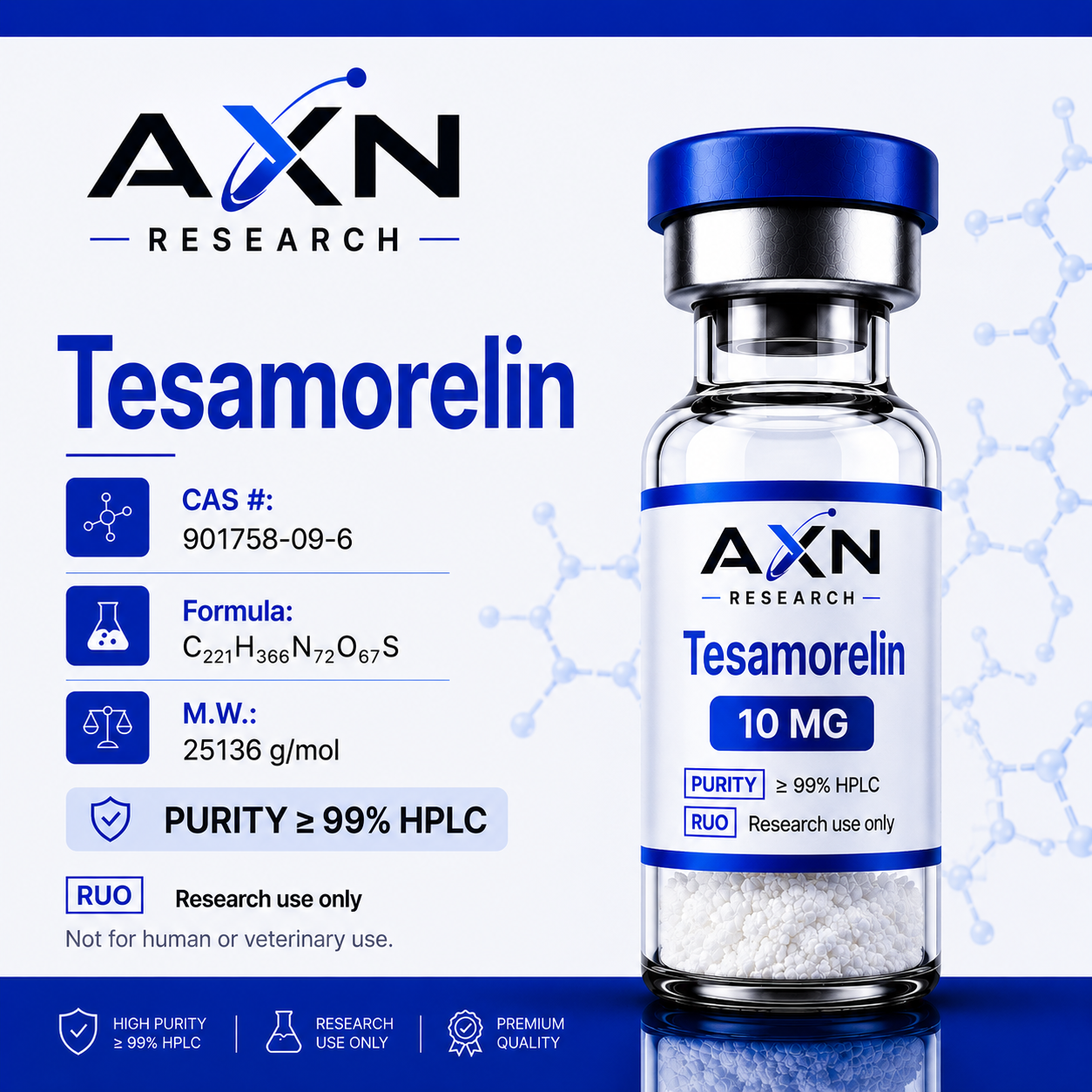
Category: Vial
Historical Development
Tesamorelin is an investigational synthetic peptide developed as an analog of Growth Hormone-Releasing Hormone (GHRH). Research surrounding the compound expanded during the 1990s and 2000s as studies explored its ability to stimulate endogenous growth hormone signaling pathways. Scientific interest has focused on metabolic regulation, body composition, recovery-related mechanisms, and the physiological modulation of growth hormone and IGF-1 activity.
Receptor Mechanisms and Intracellular Signaling
Tesamorelin has been investigated for its interaction with Growth Hormone-Releasing Hormone (GHRH) receptors located primarily within the pituitary signaling axis.
Experimental studies suggest potential influence on:
- Endogenous growth hormone release pathways
- IGF-1 related signaling mechanisms
- Lipid metabolism regulation
- Cellular growth and repair signaling
- Protein synthesis pathways
- Energy utilization processes
- Metabolic homeostasis mechanisms
Preclinical and investigational models have also explored its relationship with body composition regulation, visceral adipose tissue pathways, and growth hormone-mediated cellular activity.
Scientific Research and Studies
In vitro, preclinical, and investigational clinical studies have evaluated the effects of Tesamorelin on growth hormone signaling, metabolic regulation, and body composition-related pathways.
Research investigations have reported:
- Increased endogenous growth hormone activity
- Modulation of IGF-1 related biomarkers
- Alterations in lipid metabolism parameters
- Changes in body composition-related markers
- Effects on metabolic signaling pathways
- Experimental improvements in visceral adiposity-related measurements
- Enhanced activity within growth hormone-mediated physiological processes
Current research continues to evaluate long-term safety, tolerability, and metabolic outcomes across various investigational settings.
References
Selected literature involving Tesamorelin, GHRH receptor signaling, endogenous growth hormone regulation, IGF-1 pathways, metabolic homeostasis, lipid metabolism, body composition research, and investigational endocrine studies.